


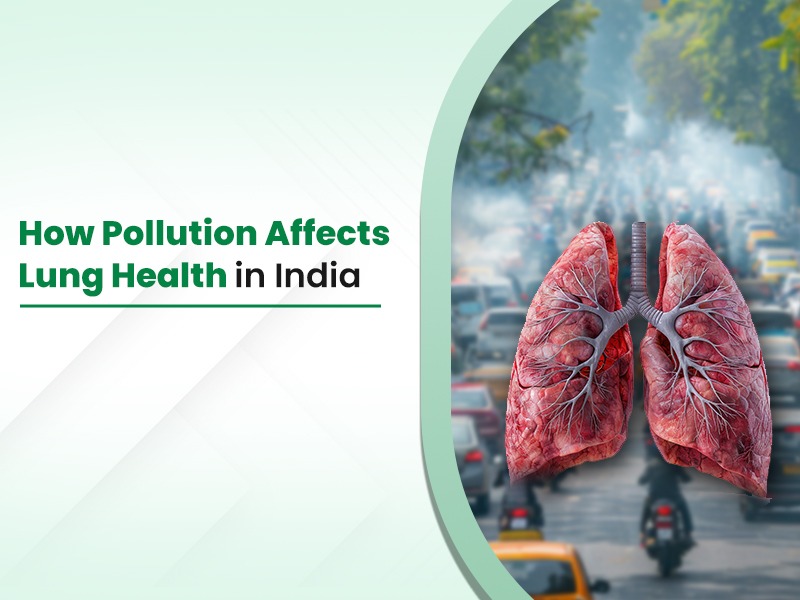
How Pollution Affects Lung Health in India
Every winter, we all notice it. The air turns heavy, a faint smell of smoke hangs around, and the morning sky looks dull grey instead of blue. For many of us living in Delhi NCR, this has become normal. But it shouldn’t be. What we’re breathing during these months is not fog; it’s a thick mix of dust, gases, and smoke that goes straight into the lungs.
When the Air You Breathe Becomes a Threat
In India, air pollution is one of the biggest causes of lung problems today. The mix of traffic fumes, factory smoke, and stubble burning adds up to dangerous levels of PM2.5 and PM10 particles in the air. These are very fine particles – so fine that our nose and throat can’t filter them out. They travel deep inside the lungs and irritate the delicate lining there.
Commonly, even healthy, young individuals complain of cough, throat irritation, or breathlessness during the pollution season. Some believe it’s just a seasonal infection, but their lung tests tell another story – reduced capacity, early inflammation, or mild airway obstruction.
That’s the real cost of polluted air. It doesn’t cause pain right away, but it slowly chips away at lung health year after year.
Why Delhi NCR and Ghaziabad Are Affected More
Delhi and nearby cities like Ghaziabad are among the worst-hit areas. The geography traps pollutants close to the ground, and the combination of traffic, construction, and crop residue burning keeps the air quality poor for long stretches of time.
During these months, outpatient departments across hospitals fill up. The best pulmonologist in Delhi NCR see a clear rise in patients with breathing issues, persistent cough, or asthma attacks.
In Ghaziabad, it’s the same story. Even people who never had breathing problems before start using inhalers or nebulizers. For them, meeting the best pulmonologist in Ghaziabad becomes necessary to prevent worsening of their symptoms.
How Pollution Damages the Lungs
Think of the lungs as soft, spongy tissue made of millions of air sacs. When polluted air enters, the fine particles get trapped in those sacs. The body tries to defend itself by creating inflammation, which is like a small fire inside the tissue. Over time, these small fires leave scars.
This scarring reduces how much air the lungs can hold, making you feel short of breath. Long-term exposure can lead to conditions such as chronic bronchitis, COPD, and even early signs of fibrosis.
Warning Signs You Shouldn’t Ignore
Some early clues are easy to miss:
- A cough that stays longer than two weeks
- Heaviness in the chest or fatigue
- Shortness of breath while walking or climbing
- Repeated throat or chest infections
If you notice any of these, don’t wait. A quick lung function test can show how well your lungs are working. At Yashoda Hospital, our pulmonology department routinely conducts these tests to pick up early changes.
How to Protect Yourself
We can’t clean the city’s air alone, but there are small ways to reduce exposure:
- Avoid morning walks when the AQI is very high.
- Wear a well-fitted N95 mask when you step outside.
- Keep doors and windows closed during peak smog hours.
- Stay hydrated and eat foods rich in vitamin C and antioxidants.
- Quit smoking completely – pollution plus smoke is a double burden on the lungs.
Simple steps, yes, but they help.
When to See a Specialist
If you’re already feeling breathless or coughing frequently, don’t delay medical help. At Yashoda Group of Hospitals’ Pulmonology Department, patients receive care from some of the top pulmonologists in Delhi NCR.
Our team handles everything from allergy-related asthma to advanced COPD management. We use advanced tools like spirometry and HRCT scans for accurate diagnosis.
Yashoda Hospital is also counted among the top hospitals in Delhi NCR, with a complete setup for emergency and long-term respiratory care.
Final Words
We can’t stop breathing, and we can’t avoid the air around us. But we can act early. The lungs don’t complain loudly until the damage is advanced, so early attention matters.
If you live in Delhi NCR or Ghaziabad and feel even mild discomfort in breathing, visit a pulmonologist once. A small check-up today can prevent a big problem later.
Your lungs are your body’s lifeline – protect them while you can.