


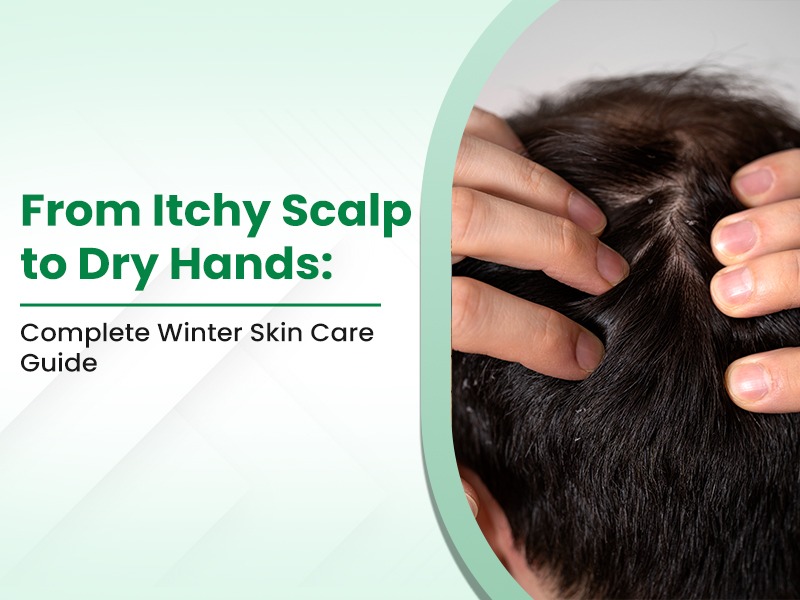
From Itchy Scalp to Dry Hands: Complete Winter Skin Care Guide
Winter brings cool mornings and pleasant evenings, but it also brings skin concerns that stay longer than expected. Most people notice an itchy scalp, tight cheeks, dry patches around the nose, and rough hands within the first few weeks of the season. These changes occur because the cold air outside and the heated indoor air both reduce moisture from the outer layer of your skin.
When you allow this dryness to continue, it affects the natural barrier that keeps your skin comfortable and healthy. This is why people often seek guidance from the best skin doctor in Indirapuram during this time of the year. This guide walks you through the main winter concerns and offers practical steps you can follow to keep your skin healthy and glowing.
What are the Most Common Winter Skin Problems?
Winter affects each area of the body differently. To prevent long-term irritation, you must first identify the common skin changes and symptoms early. Here are the problems you may face this winter season, due to which you may have to visit a hospital in Ghaziabad:
Itchy or Flaky Scalp
Reduced moisture makes the scalp dry and more prone to flaking. People sometimes confuse this with dandruff, but winter dryness has finer, lighter flakes and more itching. Mild dryness improves with nourishing oils or a moisturising shampoo.
Dry and Tight Face
The face loses moisture faster than other parts of the body. This leads to a stretched feeling around the cheeks and forehead. People often complain of makeup not settling or small lines becoming more visible.
Cracked Lips
The lips lose water faster than other areas because they have no natural oil glands and a very thin protective layer. Winter air reduces surface moisture even more, so tiny breaks form quickly, especially when you lick your lips often.
Rough Hands and Feet
Hands face frequent washing and exposure to cold water, which removes natural oils. Winter air then dries the surface further, causing roughness and peeling.
Feet develop cracks because reduced moisture hardens the outer skin, and this hardened layer splits easily under pressure.
Redness and Burning Sensations
Moving from cold air to indoor heating makes surface blood vessels widen quickly, causing redness and a warm, burning feeling in sensitive skin. Hot showers also strip natural oils, weakening the barrier and increasing irritation.
How Can You Protect Your Skin Every Day During Winter?
Small daily changes keep your skin stable during winter when moisture loss increases. As the skin specialist in Vaishali Ghaziabad may advise, these steps strengthen the surface layer that protects you from dryness and irritation:
Use Lukewarm Water Instead of Hot Water
Hot water removes natural oils quickly because it dissolves the protective lipid layer. Lukewarm water keeps this layer intact, so the skin does not feel tight after bathing.
Moisturise Within a Few Minutes After Bathing
Your skin loses water immediately after you step out of the bath. Applying a cream-based moisturiser while the skin is still slightly damp traps that water inside. This supports the skin barrier and keeps the surface smooth for longer.
Choose Gentle Cleansers
Foaming cleansers contain strong detergents that break down natural oils. Cream-based cleansers clean the skin without disrupting its pH balance or barrier function. This prevents dryness and irritation that often worsen in winter.
Apply Lip Care Regularly
The lips dry faster because they have no oil glands. A nourishing lip balm forms a thin layer that reduces water loss and protects the delicate skin from cracks. Regular reapplication maintains moisture throughout the day.
Protect Your Hands and Feet
Hands lose moisture every time they come in contact with water or soap. A hand cream restores the outer barrier so the skin feels soft and comfortable.
Feet develop harder skin in winter due to low moisture. Applying a thick cream at night softens this layer, and wearing socks prevents further dryness.
Use a Humidifier Indoors When Possible
Indoor heaters reduce air moisture. Low humidity pulls water from your skin. A humidifier improves room humidity and reduces flaking.
Stay Hydrated and Add Healthy Fats to Your Diet
Drinking enough water supports internal hydration. Foods rich in natural oils and omega-3 fats strengthen the skin barrier and reduce dryness. Nuts, seeds, and plant oils are helpful during winter.
If dryness becomes persistent or affects daily comfort, it is best to consult the best skin doctor in Indirapuram for guidance tailored to your skin concerns.
When Should You Visit a Skin Specialist for Winter Concerns?
Some signs indicate that your skin may require a medical evaluation rather than home remedies. You should consider visiting a professional at the best hospital in Ghaziabad if you experience any of the following:
- Redness that spreads quickly
- Constant Itching
- Deep cracks on the hands or feet
- Burning after applying moisturisers
- The scalp starts shedding in large amounts
- Rashes appear without a clear reason
- History of eczema or psoriasis
Restore Your Winter Skin Comfort With Yashoda Medicity!
Your skin deserves attention during winter, especially when dryness affects your confidence or comfort. At Yashoda Medicity, we have a team of experienced skin specialists in Vaishali, Ghaziabad, who offer updated dermatology care, modern diagnostic support, and explain every step clearly. If you want complete seasonal skin care or need an evaluation for persistent dryness, choose a centre known for safe treatment and patient comfort. Your winter skin can feel soft, calm, and healthy again with the right guidance.
Also read: Hydration Hacks for Healthy, Glowing Skin During Cold Weather