


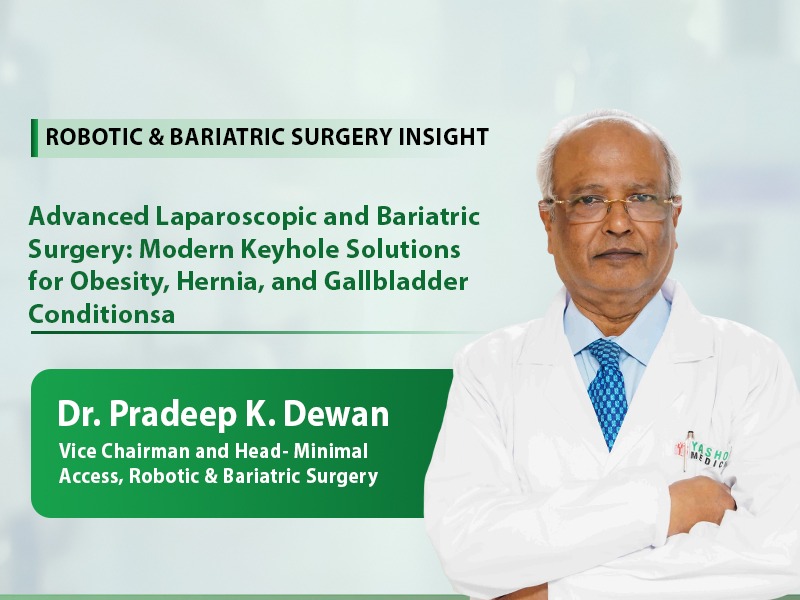
Advanced Laparoscopic and Bariatric Surgery: Modern Keyhole Solutions for Obesity, Hernia, and Gallbladder Conditions
Tiny cuts are changing the healing process so dramatically that a major abdominal surgery nowadays is just a matter of a few quick operations or “keyholes,” which are mainly focused on your comfort, and recovery has become faster. Minimal Access, bariatric & General Surgery is the name of this up-to-date surgical method, which has replaced traditional open incision treatments for many conditions. Using high-definition cameras and specially designed instruments, surgeons can now handle complex situations with a level of precision that was once only a dream.
For instance, if you have chronic gallstones or want to lose weight, the state-of-the-art surgical methods of a Bariatric & Laparoscopic Surgeon in Delhi NCR, will ensure that the road to recovery is paved with the latest clinical innovations and thorough consideration of your well-being.
Introduction: Obesity, Hernia, and Gallbladder Conditions
Tiny incisions have changed the face of recovery by transforming major abdominal surgeries into small “keyhole” operations that really consider your comfort and fast recovery.
This modern style, or Minimal Access, Bariatric & General Surgery, has replaced long, incisional traditional methods for treating various conditions. By employing high-definition cameras and specialized tools, surgeons can now address complex issues with greater precision than before.
Should you be troubled by persistent gallstones or if you want to lose weight, weight loss surgery, the advanced surgical methods brought by a Bariatric & Laparoscopic Surgeon at Yashoda Medicity Ghaziabad guarantee that your health process is supported by the most recent clinical breakthroughs and a commitment to patient safety.
Understanding the Triple Challenge: Obesity, Hernia, and Gallbladder Conditions
Surgery today often targets three very common yet different problems in the abdomen. Knowing these is the first step toward the right treatment:
- Obesity: It is a complicated and long-lasting disorder involving too much body fat, which leads to a higher risk of many other health problems. If changing one’s eating habits and engaging in physical activity fail, bariatric surgery offers a metabolic strategy to alter the digestive system and achieve a drastic, lasting weight reduction.
- Hernia: A hernia is a condition in which an internal organ or fatty tissue protrudes through a weak spot in the muscle or connective tissue that holds the body together. The bulges that appear in the abdomen or groin areas are mostly the outward signs of the hernias. Without surgical treatment, such hernias can become strangulated, meaning that the blood supply to the herniated part is cut off, and hence the tissue dies, and the patient may die if untreated.
- Gallbladder Disorders: The primary issue here is gallstones, which are small, hard crystals in digestive fluid that can partially or completely block the bile duct leading to the gallbladder. When this occurs, so-called cholecystitis develops, accompanied by severe abdominal pain and an increased risk of infection.
What Does My Gallbladder Do?
The gallbladder is a small, pear-shaped organ situated right under the liver in the upper right abdomen. Its main function is to store bile, a digestive fluid produced by the liver. Interestingly, the liver produces about 800 ml of bile, which is transported to the intestine through the bile duct. On the other hand, the gallbladder stores only 20 to 30 ml of this fluid, concentrating it for release during meals.
Luckily, the gallbladder is a non-vital organ, and its removal does not cause significant impairment of digestive function, as the body compensates by allowing bile to flow directly from the liver to the small intestine.
When Do You Need Gallbladder Surgery?
Surgery is normally the course of action for those who have gallstones plus symptoms such as severe pain, jaundice, or an infection. On the other hand, the guidelines of medicine also allow for the operation of some patients without symptoms, for example:
- People who have a family history of gallbladder cancer.Patients with a “porcelain gallbladder” (calcified walls).
- Persons taking immunosuppressive drugs for a long period.
- Patients having another surgical operation on the abdomen.
The Gold Standard: What is Laparoscopic (Keyhole) Cholecystectomy?
Laparoscopic Cholecystectomy is the gold standard procedure for gallbladder extraction that is widely performed now. Four incisions, each smaller than 1.5 cm, are made during the operation:
- Umbilical Port: A camera is inserted to provide a view of the internal organs.
- Operating Ports: Two holes are made to allow instruments to perform gallbladder dissection.
- Assistance Port: A fourth opening is used by an assistant to provide traction, giving the surgeon a clearer view.
The gallbladder is taken out using one of these tiny incisions with the help of very fine surgical instruments.
Why Opt for Minimal Access Surgery?
Laparoscopic removal is considered the gold standard because it facilitates a much faster recovery than “open” surgery. While open surgery may still be required in less than 5% of complex cases, the benefits of the keyhole approach are extensive.
Laparoscopic (Keyhole Surgery)
- Pain levels are minimal and usually managed with mild medications.
- Hospital stay is short, often same day discharge or overnight observation.
- Patients can start walking within 4–6 hours after surgery.
- Surgical scars are very small and tend to fade over time.
- Recovery time is faster, typically around 1–2 weeks.
Traditional Open Surgery
- Pain levels are higher and require stronger pain medications.
- Hospital stay is longer, usually around 3 to 5 days.
- Physical activity is restricted for several weeks after surgery.
- Surgical scars are larger and usually permanent.
- Recovery time is longer, typically around 4–6 weeks.
Post-Operative Expectations and Recovery
One can be scared to go for surgery, but the care that is given to the patients after the operation is very tight, especially for a minimal access surgery.
The operation is conducted while the patient is fully asleep (under general anesthesia), and it normally lasts between 30 and 60 minutes.
- Immediate Recovery: A patient is usually monitored in a recovery suite for about an hour before he/she is taken to the room.
- Mobilization: After four hours, the patient is encouraged to get out of bed, and in most cases, may take the first oral liquid.
- Home Care: Most patients are discharged within 24 hours. You can start regular physical activity and eat a regular diet, but at first, you should avoid rich and fried foods.
Excellence in Care at Yashoda Medicity
At Yashoda Medicity, our leaders combine extensive medical knowledge, a well-defined strategic plan, and an enduring enthusiasm for patient care. Our first-level clinical excellence leaders will lead the way in ensuring high-quality, safe standards across every department.
Minimal Access, Bariatric & General Surgery Department at Yashoda Medicity houses a surgical theatre equipped with great high definition systems and up, to, date technology to make surgeries more precise. When you choose a Bariatric & Laparoscopic Surgeon at Yashoda Medicity Ghaziabad, you are getting a team that not only has wonderful skills but also a big heart.
We welcome you to a new era of healthcare that is defined by innovation and a commitment to continuously improving you.