


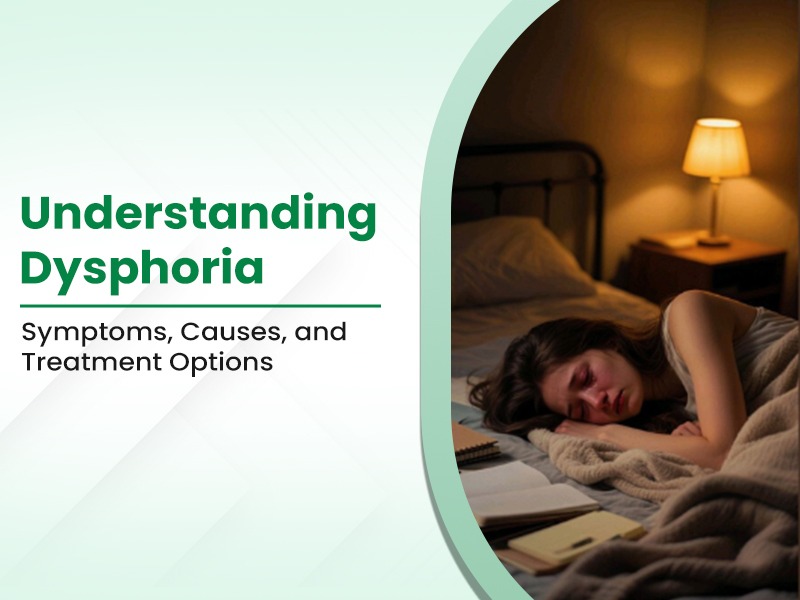
Understanding Dysphoria: Symptoms, Causes, and Treatment Options
Dysphoria is not a word most people use in everyday conversation, but the feeling it describes is something many people have experienced. It refers to a state of deep emotional discomfort, distress, or unease that goes beyond everyday sadness. Dysphoria may occur on its own or as part of a larger mental health condition. According to the World Health Organization, depression and anxiety, both of which may involve dysphoric states, affect more than 970 million people worldwide. Understanding its symptoms, causes, and treatment can help in seeking timely support.
What Is Dysphoria and How Does It Present?
Dysphoria is defined as a strong feeling of emotional discomfort or distress. It is not a diagnosis on its own, but rather a symptom seen across different mental health conditions.
People experiencing dysphoria often describe it as:
- A sense of internal restlessness or agitation.
- Numbness of feelings or being out of touch with everyday life.
- Extreme discontent that lacks a visible external trigger.
- Disproportionately low frustration tolerance or irritability.
- An overall feeling that something is amiss, even in the absence of a particular occurrence.
The intensity varies. For some people, it comes in episodes. For others, it is a more constant undercurrent.
What Causes Dysphoria?
Dysphoria does not have a single cause. It develops through a combination of biological, psychological, and environmental factors, as discussed below:
Biological Factors
Dysphoric states are linked to imbalances in neurotransmitters, such as serotonin, dopamine, and norepinephrine. Dysphoria can also be caused by hormonal changes, especially in conditions such as premenstrual dysphoric disorder (PMDD) or perimenopause.
Psychological Factors
Unprocessed trauma, chronic stress, and negative core beliefs about oneself all contribute to dysphoric states. It is frequently present in conditions like depression, bipolar disorder, borderline personality disorder, and anxiety disorders.
Environmental Factors
Dysphoria can be caused or aggravated by relationship problems, social isolation, grief, or significant life changes, especially in people who are already susceptible to mood disturbance.
A psychologist in Indirapuram can assist in determining which of the factors is causing dysphoria in a given individual, and this is critical in determining the best course of treatment.
What Is Gender Dysphoria?
Gender dysphoria is a specific and distinct form of dysphoria. It refers to the significant distress that can arise when a person’s gender identity does not align with the sex they were assigned at birth. It is recognised as a clinical condition in the DSM-5 and the ICD-11.
It is important to understand that gender dysphoria itself is not a mental illness. The distress arises from the mismatch between identity and external experience. With the right support, affirmation, and access to gender-affirming care, many individuals experience significant improvement in their overall well-being.
How Is Dysphoria Treated?
Treatment depends entirely on the underlying cause and how dysphoria is presenting for that individual.
Psychotherapy
Cognitive Behavioural Therapy and Dialectical Behaviour Therapy are both evidence-supported approaches. They help individuals identify thought patterns driving the dysphoria and build practical coping strategies.
Medication
Where dysphoria is linked to a diagnosed condition such as depression, bipolar disorder, or PMDD, medication, including antidepressants or mood stabilisers, may be part of the plan.
Lifestyle and Supportive Interventions
Regular physical activity, structured sleep, and strong social connections all contribute to reducing dysphoric states over time.
The best psychiatrist in Ghaziabad at Yashoda Medicity can assess whether dysphoria is part of a broader condition and recommend the most appropriate combination of care.
Get the Right Mental Health Support at Yashoda Medicity!
Dysphoria is real, it is treatable, and no one should navigate it without proper support. At Yashoda Medicity, a leading hospital in Noida, the psychiatry and psychology team offers compassionate, evidence-based care for individuals dealing with dysphoria and related mental health conditions. Book your consultation at Yashoda Medicity today.
Also Read: Social Media Anxiety: How Digital Life Is Affecting Mental Wellness
FAQs
Q1. What is dysphoria?
Dysphoria is a state of deep emotional discomfort, unease, or dissatisfaction. It is a symptom that can appear across several mental health conditions rather than a standalone diagnosis.
Q2. What are the common symptoms of dysphoria?
Persistent restlessness, emotional numbness, irritability, a sense of inner distress, and deep dissatisfaction without a clear cause are the most commonly reported symptoms.
Q3. What causes dysphoria in individuals?
Neurotransmitter imbalances, hormonal changes, unprocessed trauma, chronic stress, and environmental factors such as grief or relationship difficulties all contribute to dysphoria.
Q4. Is dysphoria related to mental health conditions?
Yes. Dysphoria is commonly associated with depression, bipolar disorder, borderline personality disorder, anxiety disorders, and premenstrual dysphoric disorder, among others.
Q5. What is gender dysphoria?
Gender dysphoria is the distress that arises when a person’s gender identity does not align with their assigned sex at birth. It is a recognised clinical condition addressed through affirmation, support, and, where appropriate, gender affirming care.