


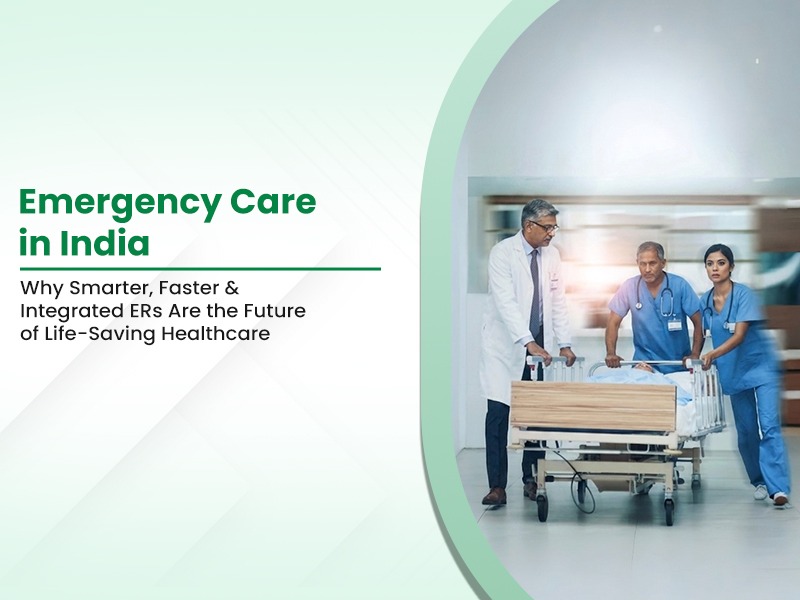
Emergency Care in India: Why Smarter, Faster and Integrated ERs Are the Future of Life-Saving Healthcare
Emergency medicine requires rapid response, teamwork & accuracy. Emergency departments aren’t working anymore, specifically, with India having an increasing incidence of urban trauma, stroke and cardiac arrest. The future of emergency medicine & therefore, the future of health, is to implement smarter, faster, integrated ecosystems. By putting diagnostic tests, immediate treatment, & specialty teams at the point of need, we eliminate the horrific delays and guarantee that every 60 seconds counts in saving lives.
The Critical Frontline Of Medicine
Patients who have an emergency, life-threatening medical condition seek medical attention through the emergency room as their first point of contact with the healthcare system. In an emergency medical situation, the initial evaluation and rapid diagnosis of the patient are not only standard procedures within the treatment plan, but also the definitive determining factors in whether a patient will survive and develop a permanent disability.
As India develops its healthcare system, the provision of quality emergency medical services in all hospitals must be prioritised, ensuring that all hospitals are adequately prepared to handle critical patients with 100 per cent accuracy.
The Flaw In Traditional Ers
India has built a considerable hospital system; however, the type of medical problems we’re facing in India is changing dramatically (e.g., increased urban trauma, strokes, and cardiac emergencies). Our traditional emergency rooms are no longer set up as functional units; they now provide isolated services (i.e., departments that are not connected).
The majority of cases that come to the emergency room require stabilisation of critical patients. At Yashoda Medicity, once stabilised, they are moved up/down/around different floors to receive CT, MRI, lab work, etc. If your brain or heart is “dying” (lost about a million brain/heart cells) every minute, those delays in providing care because of the fragmented services are too long and can end in death.
Building The Integrated Ecosystem
To solve this crisis, the future of Indian healthcare must shift toward smarter, faster, and integrated ERs. This next-generation model transforms the emergency room from a mere waiting area into a self-contained, high-tech life-saving ecosystem.
- All-in-One Diagnostic Hubs: Critical imaging tools like MRI, CT scanners, X-rays, and ultrasounds must be located directly in the ER so patients never have to travel for scans.
- Direct-Line Intervention: Advanced surgical areas, such as Cath and DSA labs, must connect directly to the ER, cutting transfer times to mere seconds.
- Automated Support Systems: Incorporating smart technologies, such as Pneumatic Tube Systems, enables urgent lab samples and medications to be moved between departments instantly.
- Specialised Command Units: Setting up dedicated “Heart and Stroke Commands” within the ER ensures that expert specialists are triggered the moment a patient arrives.
The Power Of Team Coordination
To create a better future across all aspects, delivering quality emergency medicine will require more than purchasing expensive equipment or changing the hospital’s structure. The real potential of a “smart ER” lies in technology working in conjunction with humans. Technology is only useful if there is perfect inter-departmental coordination between staff members (i.e., emergency physician, radiologist, cardiologist, neurologist, intensive care nurse). To do this properly, there will be a need for a 24/7 approach, defined communication protocols, and a staff committed to a culture of quick response times based on teamwork rather than administrative barriers.
Conclusion
In conclusion, it is essential for India to shift from fragmented approaches to physician care to a holistic, real-time model of emergency treatment centred on patient outcomes. To achieve this goal, Yashoda Medicity healthcare prioritises creating smart, connected emergency department spaces as an essential requirement rather than an optional feature. The use of integrated infrastructure, synchronised processes and collaborative teams will help propel emergency medicine departments to be the core of all healthcare, where the time spent saving lives will equate to giving someone a greater opportunity for survival.