


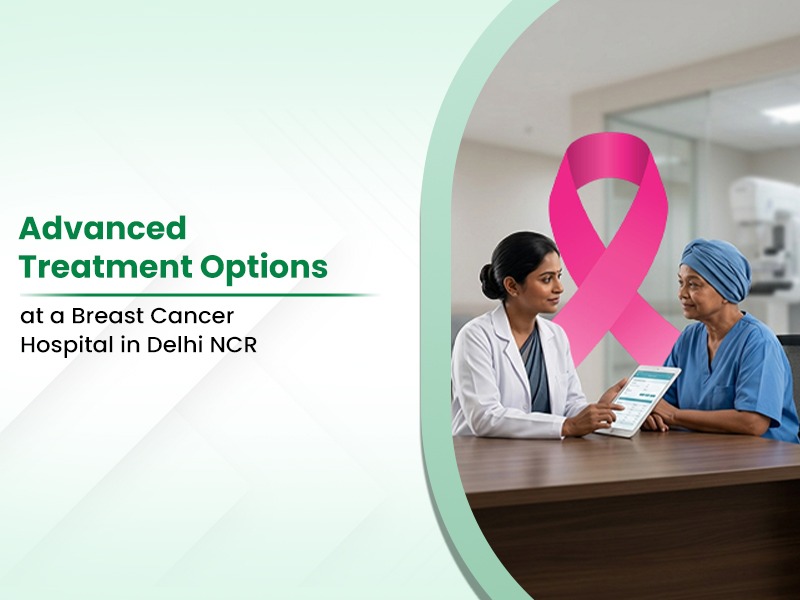
Advanced Treatment Options at a Breast Cancer Hospital in Delhi NCR
A breast cancer diagnosis is a moment that brings many questions but also a clear path forward with today’s advanced treatment options. The mind often races to the worst, even before a treatment plan is in place. However, there is reassurance in the fact that breast cancer is now among the most treatable cancers when detected early, with 5-year survival rates crossing 95% for early-stage disease. Treatment today is no longer defined by a single, frightening surgery. Instead, it is a carefully coordinated combination of breast-conserving surgery, robotic techniques, targeted therapy, immunotherapy, and radiation, each chosen to match the exact biology of the tumour. In this blog, you will learn about the advanced treatment options for breast cancer hospital in Delhi NCR.
What Are the Most Advanced Treatment Options for Breast Cancer?
Modern breast cancer care brings together five well-coordinated approaches. At the best breast cancer hospital in Delhi NCR, treatment is planned by a multidisciplinary tumour board that includes surgeons, oncologists, radiologists, and pathologists.
Breast-Conserving Surgery
Breast-conserving surgery, also called lumpectomy, involves removing only the tumour along with a small margin of healthy tissue. The aim is to preserve most of the breast while ensuring complete cancer removal. It is suitable for most early-stage patients and is often followed by radiation therapy for the best results.
Oncoplastic and Reconstructive Surgery
Oncoplastic surgery combines cancer removal with reconstructive techniques, especially when a larger area of tissue needs to be removed. It ensures both oncological safety and cosmetic balance. In cases requiring mastectomy (complete removal of the breast), immediate or delayed reconstruction is recommended to restore shape and confidence.
Robotic and Minimally Invasive Surgery
Robotic-assisted systems such as the da Vinci Xi Robotic Surgical System platform enable highly precise tumour removal with smaller incisions, reduced blood loss, and faster recovery. Most patients begin mobilising within 24 hours and can be discharged within 2 to 3 days in many cases.
Sentinel Lymph Node Biopsy
Instead of removing all underarm lymph nodes, surgeons identify and remove only the first one or two nodes to which cancer is most likely to spread. This significantly reduces the risk of long-term arm swelling (lymphoedema), by more than 65%.
Targeted and Personalised Therapy
Tumour samples are tested for markers such as HER2, hormone receptors, and BRCA mutations. Based on these results, treatment is personalised using medicines that specifically target cancer cells while sparing healthy tissue. A leading cancer hospital in Delhi NCR can usually complete this molecular profiling within 7 to 10 days.
How Does Targeted Therapy Work?
Targeted therapy works by acting on specific proteins or signalling pathways that cancer cells depend on for growth. For HER2-positive breast cancer, drugs such as trastuzumab (Herceptin) and pertuzumab block the HER2 protein responsible for tumour growth.
For hormone receptor-positive cancers, medications like tamoxifen or aromatase inhibitors reduce the body’s hormone-driven fuel supply to the tumour. CDK4/6 inhibitors represent a newer class of drugs that help slow cancer progression, especially in advanced cases.
The biggest advantage of targeted therapy is precision, leading to fewer side effects and improved outcomes compared to traditional chemotherapy.
How Does Immunotherapy Help Breast Cancer Patients?
Immunotherapy helps activate the body’s own immune system to recognise and destroy cancer cells. It is especially useful in triple-negative breast cancer, one of the more aggressive subtypes, where drugs such as pembrolizumab are combined with chemotherapy.
Treatment is usually given as an IV infusion every three weeks, and many patients are able to continue their daily activities during the course of therapy.
How Does Radiation Therapy Help After Surgery?
After breast-conserving surgery, radiation therapy plays an important role in reducing the risk of recurrence. Modern techniques have made treatment more precise and patient-friendly:
- 3D Conformal Radiation Therapy shapes the radiation beam according to the tumour bed
- IMRT and VMAT reduce exposure to surrounding organs such as the heart and lungs
- Hypofractionated Radiation completes treatment in about 3 weeks instead of 5 to 6
- Brachytherapy delivers internal radiation over a shorter duration in selected patients
The best hospitals in Delhi NCR offer these advanced radiation techniques under one roof, with treatment plans tailored to individual response and skin tolerance.
Choose Yashoda Medicity for Advanced Breast Cancer Treatment!
A breast cancer diagnosis is the beginning of a structured treatment journey, not the end of the story. At Yashoda Medicity, our breast cancer team brings together a dedicated breast clinic, robotic surgery, medical and radiation oncology, and personalised molecular profiling, all guided by a multidisciplinary tumour board. Every treatment plan is designed around your biology, your body, and your life. If you or someone close to you is navigating this diagnosis, our team is here to support you at every step. Visit our hospital and connect with our team.
Also Read: Cancer Hospital in Noida
FAQs
1. What advanced treatments are available for breast cancer?
Modern options include breast-conserving surgery, robotic procedures, sentinel lymph node biopsy, targeted therapy, immunotherapy, and advanced radiation techniques tailored to individual cases.
2. Is breast-conserving surgery suitable for all patients?
Not for everyone. It is best suited for early-stage tumours with clear margins. Your doctor will guide you toward the most appropriate approach.
3. What is targeted therapy in breast cancer treatment?
Targeted therapy uses medicines designed to block specific proteins that drive cancer growth, while sparing healthy cells and reducing side effects.
4. How does immunotherapy help breast cancer patients?
Immunotherapy strengthens the immune system to recognise and fight cancer cells, especially in aggressive subtypes like triple-negative breast cancer.
5. What role does radiation therapy play after surgery?
Radiation therapy reduces the risk of cancer recurrence after surgery and is now delivered using highly precise techniques that minimise side effects.