


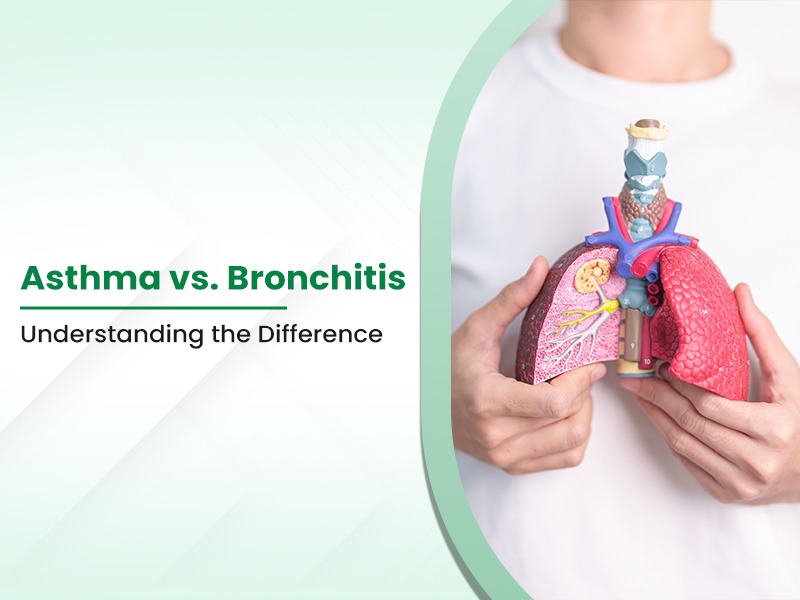
Asthma vs. Bronchitis: Understanding the Difference
Asthma and bronchitis, both originating in the lungs, can easily be confused due to their similar symptoms. Both conditions can leave you coughing, wheezing, and short of breath, and both affect how well your lungs move air in and out.
The way they appear externally to you or those around you may seem similar. However, what is actually happening inside your body is completely different and can be clearly distinguished by the pulmonologists at Yashoda Group of Hospitals. Let’s take a closer look.
What Happens in Your Body
What Exactly Happens in Asthma?
Asthma is a long-term condition that affects the airways, which are the tubes that carry air in and out of your lungs. In people with asthma, these airways are extra sensitive. They can tighten and swell up in response to triggers like dust, pollen, smoke, exercise, cold air, or even strong smells.
When this happens, breathing becomes difficult. You might notice wheezing (a whistling sound when you breathe), chest tightness, coughing, or shortness of breath. These symptoms can come and go, often worsening at night or early in the morning.
As the chest specialist in Ghaziabad clears it out, asthma is not an infection, but rather an inflammatory reaction that your body has to certain triggers. It’s something that can’t be “cured”, but it can be well controlled with regular medication and by avoiding known irritants.
What Happens in Bronchitis?
Bronchitis occurs when the bronchial tubes, which carry air to your lungs, become inflamed, usually due to infection or irritation. This inflammation causes swelling and mucus build-up, making it difficult for air to pass through.
There are two main types of bronchitis:
- Acute bronchitis: A short-term infection, often caused by viruses like the common cold or flu. It usually lasts a few weeks and improves with rest, fluids, and sometimes medication.
- Chronic bronchitis: A long-term condition where the airways remain inflamed for months or even years, most commonly due to smoking or prolonged exposure to air pollutants. Chronic bronchitis is one form of chronic obstructive pulmonary disease (COPD).
The best pulmonologist in Delhi NCR makes it clear that, unlike asthma, bronchitis often comes with a persistent cough that brings up phlegm. In acute bronchitis, this cough can linger even after the infection has cleared, while in chronic bronchitis, it tends to stick around for at least three months a year, two years in a row.
How to Tell the Difference
It can sometimes be tricky to tell whether you’re dealing with asthma or bronchitis because both cause coughing and breathing trouble. However, there are a few signs that help separate the two.
Asthma tends to cause a dry or mild cough that comes and goes. It’s triggered by allergens, exercise, or environmental factors. The wheezing sound is often more noticeable, and the chest may feel tight, especially during certain times of the day.
Bronchitis, in contrast, usually starts after a cold or respiratory infection. The cough is wetter and produces more mucus. You might also feel tired, slightly feverish, or congested. Acute bronchitis clears up over time, while chronic bronchitis keeps coming back, especially in smokers or those exposed to pollutants.
If you notice recurring wheezing or breathlessness that seems to come and go, asthma may be the reason. But if you’ve had a bad cold followed by a heavy, phlegmy cough, bronchitis is more likely. It’s important to consult a doctor before drawing any conclusions to ensure proper diagnosis and treatment.
Can You Have Both?
Yes, it’s possible. Some people have both asthma and chronic bronchitis, which can make symptoms more intense. This overlap is sometimes called asthmatic bronchitis. In such cases, managing both conditions carefully under medical guidance becomes important.
The Takeaway
Both asthma and bronchitis affect your breathing, but they do so in different ways. Asthma is a chronic condition linked to airway sensitivity, while bronchitis usually comes from infection or irritation. Recognising which one you have helped you get the right care at the right time.
If you’re struggling with frequent coughing, wheezing, or shortness of breath, don’t wait it out. Seek medical advice and get a proper diagnosis. For expert respiratory care and guidance, or if you ever need an emergency hospital near me, you can reach out to Yashoda Group of Hospitals, where specialists can help you breathe easier and regain control over your lung health.
Also Read: How Pollution Affects Lung Health in India