


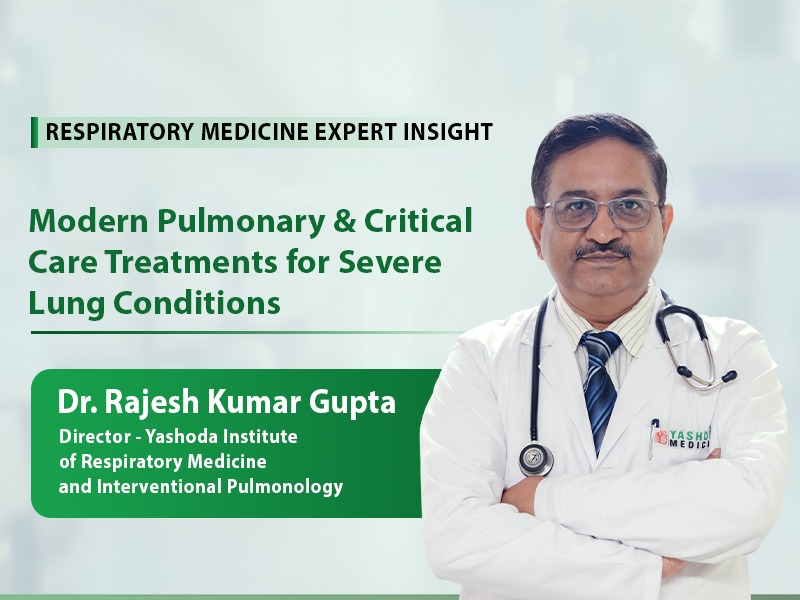
Modern Pulmonary and Critical Care Treatments for Severe Lung Conditions
Healthy lungs play a vital role in maintaining energy, oxygen supply, and overall well-being. However, severe respiratory illnesses can significantly affect daily life and may sometimes become life-threatening without timely medical care. Advances in Pulmonology & Sleep Medicine have transformed the management of complex lung conditions, allowing patients to access more precise diagnosis, minimally invasive procedures, and advanced critical care support.
At Yashoda Medicity, specialised respiratory care combines advanced technology with evidence-based treatment approaches to support patients with acute and chronic lung diseases. Patients seeking an experienced pulmonologist in Delhi NCR can access comprehensive care for conditions ranging from asthma and sleep disorders to advanced respiratory failure and interstitial lung disease.
The Evolution of Specialised Respiratory Care
Pulmonary medicine has advanced significantly over the years. Today, respiratory specialists are able to diagnose and manage complex conditions with greater precision using advanced imaging, bronchoscopy techniques, pulmonary function testing, and critical care monitoring.
Under the expertise of Dr. Rajesh Kumar Gupta, patients with chronic obstructive pulmonary disease (COPD), interstitial lung disease (ILD), pulmonary hypertension, severe asthma, and acute respiratory distress syndrome (ARDS) receive individualised treatment plans tailored to their clinical condition and long-term respiratory needs.
Oxygen Therapy: Supporting Healthy Blood Oxygen Levels
Oxygen therapy is one of the most commonly used supportive treatments in severe respiratory illnesses. It helps improve oxygen levels in patients whose lungs are unable to deliver adequate oxygen to the bloodstream.
Depending on the severity of the condition, oxygen may be delivered through:
- Nasal cannulas
- Face masks
- High-flow oxygen systems
- Tracheostomy support in critical cases
Oxygen therapy is commonly used in conditions such as:
- Severe asthma
- Pneumonia
- COPD exacerbations
- Sleep apnea
- Respiratory failure
Careful monitoring by respiratory specialists is important to ensure safe and effective oxygen delivery.
Pulmonary Rehabilitation: Improving Breathing Capacity
Pulmonary rehabilitation is a structured programme designed to improve lung function, physical endurance, and overall quality of life for patients with chronic respiratory diseases.
This multidisciplinary approach includes:
- Supervised exercise training
- Breathing exercises
- Nutritional guidance
- Patient education
- Lifestyle modification support
Pulmonary rehabilitation is particularly beneficial for patients with COPD, ILD, post-COVID lung complications, and those recovering from prolonged respiratory illness or lung transplantation.
Thoracentesis: Managing Pleural Effusion
Pleural effusion refers to abnormal fluid accumulation around the lungs, which can cause chest discomfort and breathing difficulty. Thoracentesis is a minimally invasive procedure used to remove this fluid for both symptom relief and diagnostic evaluation.
This procedure helps:
- Reduce pressure on the lungs
- Improve breathing comfort
- Identify the underlying cause of fluid accumulation
Thoracentesis is commonly performed in conditions such as pneumonia, pleural infections, malignancy-related effusions, and inflammatory lung diseases.
Tracheostomy and Mechanical Ventilation
Some critically ill patients may require prolonged ventilator support due to severe pneumonia, stroke, neuromuscular disorders, or respiratory failure. In such situations, a tracheostomy may be performed to create a direct airway through the neck.
Modern critical care management focuses not only on life support but also on gradual recovery and rehabilitation. With coordinated care involving intensivists, pulmonologists, physiotherapists, and speech therapists, many patients can regain swallowing, communication, and respiratory function over time.
Lung Transplant and Advanced Critical Care Support
For patients with end-stage lung disease that no longer responds to conventional treatment, lung transplantation may become a treatment option. This highly specialised procedure replaces diseased lungs with healthy donor lungs and requires long-term follow-up and immunosuppressive therapy.
In severe critical care situations such as septic shock or multi-organ failure, advanced life-support systems like ECMO (Extracorporeal Membrane Oxygenation) may be used to temporarily support heart and lung function while recovery takes place.
Advanced Pulmonary and Critical Care Management diagnostic procedures such as Endobronchial Ultrasound (EBUS) and Medical Thoracoscopy also allow respiratory specialists to evaluate chest conditions with greater precision using minimally invasive techniques.
Advanced Pulmonary Care at Yashoda Medicity
At Yashoda Medicity, comprehensive Pulmonology & Sleep Medicine services are designed to support patients across all stages of respiratory illness, from routine asthma management to advanced critical care interventions. With access to modern respiratory technology, specialised intensive care support, bronchoscopy services, sleep medicine expertise, and minimally invasive pulmonary procedures, the hospital focuses on improving both respiratory function and quality of life.
For patients looking for an experienced pulmonologist in Delhi NCR, timely diagnosis and advanced respiratory care can play a crucial role in achieving better long-term lung health and recovery.
Click here: Pulmonologist in Yashoda Medicity Ghaziabad