


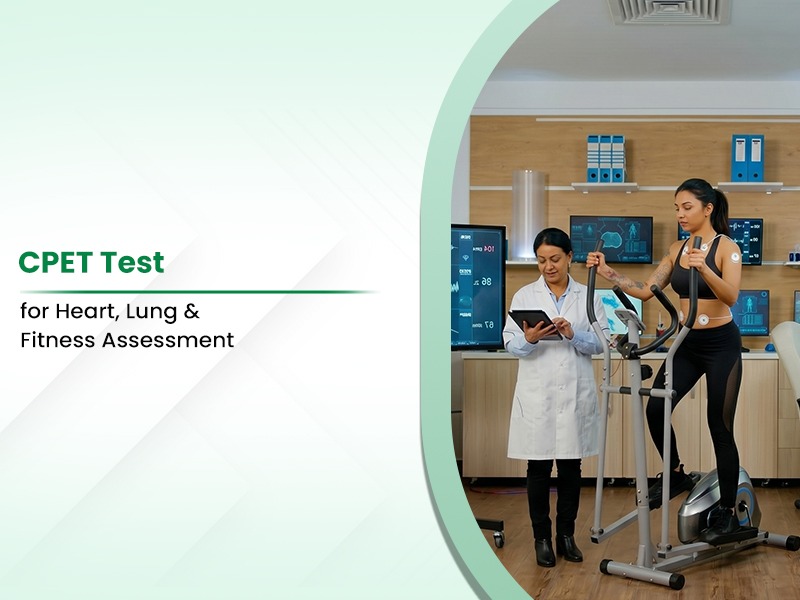
CPET Test for Heart, Lung & Fitness Assessment
Exceeding your physical limits requires more than determination alone. It requires a clear understanding of how your body responds to increasing levels of physical stress and performance demands. Whether you are training for a marathon, preparing for competitive sports, or working towards a personal fitness goal, understanding your body’s capabilities can help optimise performance and reduce health risks. At Yashoda Medicity, our specialists offer the CPET test (cardiopulmonary exercise test) as part of a comprehensive fitness assessment programme designed for athletes, fitness enthusiasts, and individuals seeking detailed insights into their cardiovascular and respiratory health.
Understanding the CPET Test (Cardiopulmonary Exercise Test)
A CPET test (cardiopulmonary exercise test), also known as a metabolic exercise stress test, is a comprehensive evaluation of how effectively the heart, lungs, blood vessels, and muscles work together during exercise.
Unlike conventional stress tests that primarily assess heart rhythm and cardiac response, CPET measures how efficiently oxygen is delivered and utilised by the body while exercising. It evaluates aerobic capacity, endurance, respiratory efficiency, and exercise tolerance under controlled conditions.
For athletes, the CPET test (cardiopulmonary exercise test) is considered the gold standard for assessing aerobic fitness, anaerobic threshold, and maximum oxygen uptake (VO₂ max). It helps identify whether performance limitations are related to cardiovascular fitness, respiratory function, or overall exercise capacity.
What is Included in an Advanced Body Fitness Test Package?
Athletes and fitness-conscious individuals often require more than a routine health assessment. Yashoda Medicity offers a comprehensive lung health checkup package that combines advanced diagnostic technologies with specialist consultations to provide a complete picture of physical performance and overall wellbeing.
This programme evaluates multiple health and fitness parameters and includes consultations with key specialists.
Specialist Consultations
Participants receive dedicated consultations with:
- Dietitian
- Internal Medicine Specialist
- Cardiologist
- Physiotherapist
These consultations help translate clinical findings into personalised recommendations for training, recovery, nutrition, and performance optimisation.
Metabolic and Cardiovascular Assessment
The programme includes:
- Cardiopulmonary Exercise Testing (CPET)
- Echocardiography (ECHO)
These assessments evaluate heart structure, valve function, cardiovascular efficiency, and exercise performance.
Pulmonary Evaluation
The lung health checkup package includes pulmonary assessment through:
- Chest X-ray (P.A. View)
- Respiratory performance evaluation during CPET
These tests help assess lung health and breathing efficiency during exercise.
Biochemical Performance Markers
Comprehensive laboratory investigations include:
- Complete Blood Count (CBC)
- ESR (Erythrocyte Sedimentation Rate)
- Vitamin D
- Vitamin B12
- Magnesium
- Iron Studies
- Creatine Phosphokinase (CPK)
These markers provide insights into recovery, muscle health, nutritional status, and overall performance readiness.
Organ Function and Metabolic Screening
Additional evaluations include:
- Kidney Function Test (KFT)
- Liver Function Test (LFT)
- Fasting Blood Sugar (FBS)
- Complete Lipid Profile (CLP)
These assessments help identify underlying conditions that may affect athletic performance and long-term health.
Body Composition and Bone Health
Advanced body composition analysis includes:
- Bioelectrical Impedance Analysis (BIA)
- DEXA Scan
These tests measure body fat percentage, lean muscle mass, and bone mineral density, helping athletes optimise conditioning and injury prevention strategies.
Exploring the Heart Screening Package
Peak athletic performance depends heavily on cardiovascular efficiency. A comprehensive heart screening package combines echocardiography and CPET to evaluate both the structure and function of the heart. While echocardiography provides information about heart chambers, valves, and blood flow, CPET evaluates how effectively the cardiovascular system responds to exercise stress.
The heart screening package can help identify underlying cardiovascular conditions that may increase the risk of exercise-related cardiac events, particularly during high-intensity training or competition. Early detection allows for timely intervention and safer participation in sports and fitness activities.
The Role of a Lung Health Checkup Package
Efficient breathing plays a critical role in athletic performance and endurance. A dedicated lung health checkup package helps evaluate respiratory capacity and exercise-related breathing patterns.
During CPET, specialised respiratory monitoring equipment measures oxygen consumption, carbon dioxide production, and ventilation in real time. This information helps clinicians understand how effectively the lungs support physical activity.
The data may also help identify conditions such as exercise-induced bronchospasm and other respiratory limitations that can affect performance and recovery.
The CPET test (cardiopulmonary exercise test) is performed in a controlled environment under expert medical supervision.
Set-Up
Before the test begins, a technician attaches ECG leads to the chest, applies a blood pressure cuff, places a pulse oximeter, and fits a specialised breathing mask.
Resting Baseline
You will sit or stand still for approximately 2–3 minutes while baseline measurements of heart rate, blood pressure, oxygen saturation, and breathing patterns are recorded.
Warm-Up Phase
A light warm-up on a treadmill or stationary bicycle allows the body to gradually adapt before exercise intensity increases.
Incremental Exercise Phase
The exercise phase typically lasts 8–12 minutes. The treadmill speed, incline, or cycling resistance gradually increases until you reach your maximum safe exercise capacity, allowing the collection of detailed performance data.
Recovery Phase
Following exercise, a monitored cool-down period of approximately 3–5 minutes evaluates how quickly heart rate, breathing, and oxygen levels return to baseline.
Take Control of Your Performance Journey
Whether you are training for a competition, improving your fitness, or simply seeking a deeper understanding of your cardiovascular and respiratory health, a CPET assessment can provide valuable insights.
Understanding the body fitness test package price and the range of evaluations included can help you choose a programme that aligns with your fitness goals and health requirements.
At Yashoda Medicity, our advanced diagnostic facilities and multidisciplinary specialists work together to provide comprehensive performance assessments tailored to every individual.
Connect with our experts today to learn more about the CPET test (cardiopulmonary exercise test) and available fitness evaluation packages.
FAQs
What is the primary difference between a CPET test and a standard cardiac stress test?
A CPET test evaluates both heart and lung performance by measuring breathing, oxygen consumption, and cardiovascular response during exercise, whereas a standard cardiac stress test primarily focuses on heart rhythm and cardiac function.
How long does the entire assessment appointment take?
The complete appointment generally takes around 60–90 minutes, including preparation, exercise testing, and recovery monitoring.
What specific training data does an athlete receive from this evaluation?
Athletes receive measurements of VO₂ max, anaerobic threshold, exercise capacity, and personalised training zones that can help optimise performance and endurance.
Can I eat or drink before arriving for my scheduled test?
It is generally recommended to avoid food and beverages other than water for at least four hours before the test. Specific instructions may vary based on individual requirements.
Why does the fitness package include a DEXA scan and body composition analysis?
These assessments provide detailed information about lean muscle mass, body fat distribution, and bone density, helping individuals optimise training programmes, monitor progress, and reduce injury risk.