


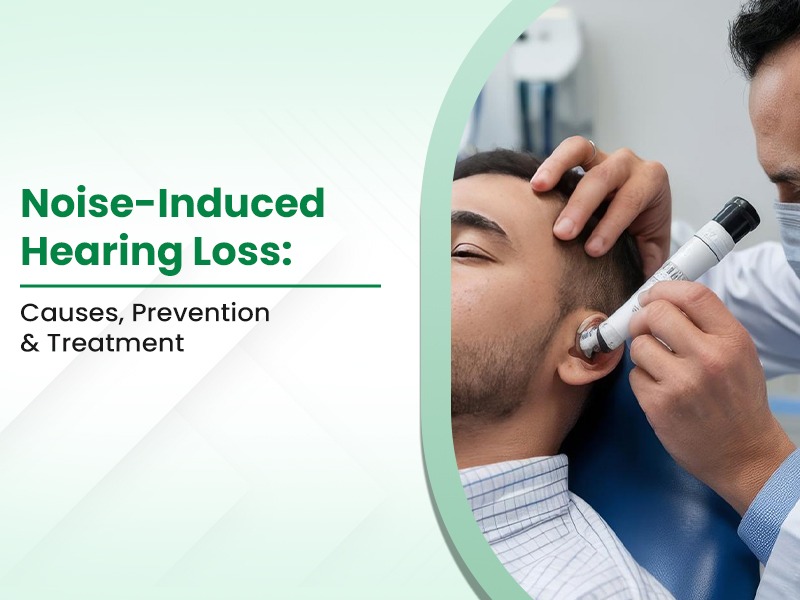
Noise-Induced Hearing Loss: Causes, Prevention & Treatment
The constant noise of city life, combined with frequent headphone use, can do more than just disturb your peace. Over time, it can affect your long-term hearing health. If you regularly have difficulty hearing or often ask others to repeat themselves, it is important to consult a top ENT specialist in Ghaziabad at a trusted hospital in Noida to understand the issue.
Yashoda Medicity provides high-quality care using state-of-the-art equipment and experienced professionals. Noise-induced hearing loss (NIHL) affects thousands of people every day, but with the right information and timely guidance from a top ENT specialist in Ghaziabad, it can be effectively managed.
What is Noise-Induced Hearing Loss (NIHL)?
During routine activities, our lives are filled with sound, from appliances humming to busy airport terminals. Most of the time, the sounds we hear are at safe levels. However, when sound reaches unsafe levels, even briefly, or stays loud for extended periods, it can damage the delicate structures of the inner ear.
There are two types of NIHL: the immediate onset type, caused by sudden loud noise such as an explosion, and the gradual onset type, caused by prolonged exposure to high sound levels over time, such as extended headphone use. Both types can lead to temporary or permanent hearing loss in one or both ears. Importantly, NIHL is one of the few types of hearing loss that can be completely prevented.
Who is At Risk?
Noise exposure can occur at any age and lead to hearing damage.
- Adults: Nearly 40 million adults aged around 70 or younger exhibit signs of NIHL.
- Teens: Approximately 17% of teens ages 12-19 are at risk of hearing damage from loud music played through personal listening devices, as per the National Institute on Deafness and Other Communication Disorders.
This shows that hearing loss is not limited to occupational exposure but is increasingly linked to everyday lifestyle habits.
What Causes Damage to Our Ears?
Noise levels produced through day-to-day life can affect your hearing. For example, normal conversation ranges from 60 to 70 dBA (decibels) and is not harmful. However, as sound intensity increases beyond this range, the risk to hearing also rises.
Movie theatres (74 to 104 dBA) may pose some risk of hearing loss. Motorcycles (80 to 110 dBA) and headphones used at maximum volume (94 to 110 dBA) fall into high-risk categories. Extremely loud sounds such as sirens (110 to 129 dBA) and firecrackers or explosions (140 to 160 dBA) can cause immediate and significant hearing damage.
How Does Loud Noise Physically Damage Hearing?
To understand hearing loss, it is important to know how the ear works. Sound waves travel through the ear canal, strike the eardrum (tympanic membrane), and cause it to vibrate. These vibrations are passed to three small bones in the middle ear: the malleus, incus, and stapes. From there, the vibrations move into the cochlea, a fluid-filled structure in the inner ear.
According to an ENT specialist in Indirapuram, the cochlea contains tiny hair cells, also known as stereocilia. These cells convert sound vibrations into electrical signals that the brain can interpret.
- The Issue: Loud noise overstimulates these hair cells, causing them to bend or break.
- The Effect: Unlike other cells, these hair cells do not regenerate. Once they are damaged, the resulting hearing loss is permanent.
Identifying the Signs: Do I Need an ENT Specialist in Indirapuram?
Since NIHL is typically progressive, the changes may not be noticeable at first. However, over time, it can begin to interfere with daily life.
The following are some of the most common signs:
- Distorted or muffled sounds
- Difficulty hearing and understanding words, especially in noisy environments
- Tinnitus (constant ringing or buzzing in the ears)
- Sensitivity to certain sounds
If you experience any of these symptoms, booking an appointment with an ENT specialist in Indirapuram is an important step to prevent further hearing loss.
Advanced Treatment and Care at Yashoda Medicity
There is no way to restore hair cells once they are damaged. However, modern technology can help individuals manage Noise-Induced Hearing Loss (NIHL) and improve their quality of life.
At Yashoda Medicity, the ENT department, led by the top ENT specialist in Ghaziabad offers:
- Otology Services: Treatment for conditions ranging from earwax blockage to Meniere’s disease.
- Surgical Interventions: Repair of perforated eardrums and damage to middle ear bones.
- Hearing Technology: Advanced hearing devices and solutions for better sound management.
- Comprehensive Diagnostics: Detailed audiometric testing to accurately assess hearing levels.
The team, including experienced ENT doctors in Ghaziabad, works closely with surgeons, allergists, and hearing specialists to treat conditions such as sinusitis, tonsillitis, and hearing loss at a leading hospital in Noida.
FAQS
- Can noise-induced hearing loss be reversed?
No, because hair cells in the inner ear do not regenerate once damaged. - How can I tell if a sound is dangerously loud?
If you need to shout to be heard from an arm’s length away, the sound is likely above the safe 85 dBA level. - Are children at higher risk for hearing damage?
Yes, children are more vulnerable because their ear canals can amplify sound, and they may not recognise harmful noise levels. - Does NIHL always affect both ears equally?
Not necessarily. Uneven exposure, such as directional noise, can damage one ear more than the other. - What should I look for in an ENT specialist in Indirapuram?
Choose a qualified specialist at a reputed facility like Yashoda Medicity with expertise in otology and advanced hearing diagnostics.