


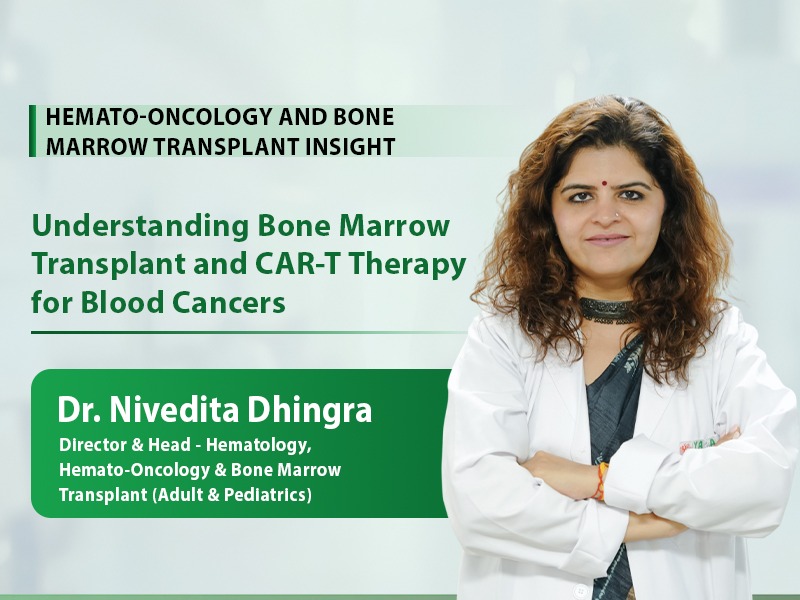
Understanding Bone Marrow Transplant and CAR-T Therapy for Blood Cancers
A diagnosis of blood cancer is perhaps the most life-changing news an individual can receive. The journey to recovery can, at times, feel like a confusing and complicated process of medical terms and modern treatments. But, with the help of a professional, such as Dr. Nivedita Dhingra, Haematologist & Hemato-Oncologist, patients can get the best treatment that converts the term “impossible” into “manageable.”
Being a renowned Hematologist & Hemato-Oncologist in Delhi NCR, Dr. Dhingra deals with the most advanced forms of cellular therapies on a routine basis. She uses precision medicine and empathetic care as her main weapons in helping patients with leukaemia, lymphoma, and multiple myeloma find new levers of hope in their battle against these diseases.
What are Bone Marrow Transplants and CAR-T Cell Therapies?
A Bone Marrow Transplant (BMT) is the same as a stem cell transplant. It is a medical procedure wherein healthy stem cells are transplanted to replace damaged or destroyed bone marrow. The stem cells are like the “seeds” from which new, healthy blood cells grow.
CAR T Cell Therapy (Chimeric Antigen Receptor T-cell therapy) has revolutionised cancer treatment. Rather than taking cells from a donor, this “living drug” recycles a patient’s immune cells (T, cells), which are genetically modified to identify and destroy the cancer cells that exhibit certain proteins. Whereas a BMT might be compared to a remodelling of the “factory, ” CAR T is like re-equipping the body’s “security force.”
Which blood disorders are treated by BMT and for which CAR T is preferred
BMT is curative therapy for blood cancers like acute leukemias, myelofibrosis and myelodysplastic syndromes and certain congenital and acquired non-cancerous diseases like Thalassemia, sickle cell anemia and aplastic anemia.
CAR T cell therapy is currently available for relapsed and refractory blood cancers of B cell origin like B cell lymphomas and leukemias. It can be even offered to patients where all other treatments including BMT have failed. Many more CAR T products are on the horizon for diseases like multiple myeloma and many solid cancers.
How Does a Bone Marrow Transplant Differ by Donor Type?
Most of the time, the success of a transplant depends on the appropriateness of the biological match. One of the doctors who expertly handles the complexities of donor selection is Dr Nivedita Dhingra, who is especially proficient in cases where a perfectly matched sibling is unavailable.
- Autologous Transplant: The use of the patient’s own stem cells. It is a treatment option for Multiple Myeloma and several other types of Lymphoma.
- Allogeneic Transplant: The use of cells that have been derived from a donor. The donor is usually a family member whose level of match with the patient is determined by a simple blood test called HLA typing. Approximately 40% patients find a fully matched or HLA-identical donor in the family. In rest of the cases alternative donors are searched for in donor registries or haplo-identical or half matched donors in the family are called upon to donate stem cells.
Reclaiming Your Health with Yashoda Medicity
It is equally important to choose the right doctor and the right hospital. At Yashoda Medicity, we have partnered the clinical expertise of our specialists, such as Dr Nivedita Dhingra, with state-of-the-art technology.
To maintain the highest safety standards during your recovery, our hospital has ultra-modern, HEPA-filtered transplant units and Advanced Cell-Processing Labs. We strive to make each patient’s path to remission as harmonious and comfortable as possible by meticulously personalising every phase of the journey, diagnosis, treatment, and follow-up care after the transplant.
Is it you or your dear one who requires consultation regarding the treatment of blood cancer? Get in touch with Yashoda Medicity to book an appointment with Dr. Nivedita Dhingra and move forward stepwise with advanced therapy.